
As outlandish as it might seem today, there once was a time when a single logo of a single mountain bike brand would be universally recognized as THE logo of mountain biking. The famous “RockShox” logo in the early 90s earned that reality.
That a previously unknown pair of NorCal motorcycle enthusiasts with zero background in the cycling industry could steal away the marketing impact from so many well-versed global bike brands in a few short years speaks to the impact that their revolutionary suspension fork had on the sport.
Simply put, if ever there was a mountain bike version of the proverbial “match made in Heaven”, it was the day Paul Turner and Steve Simons partnered in 1988 to create the mountain bike suspension company that would forever alter the face of the sport.
The main ingredient that made their recipe such a success? Simple—motorcycles. Both Turner and Simons had extensive experience in the performance-oriented world of professional motocross racing.
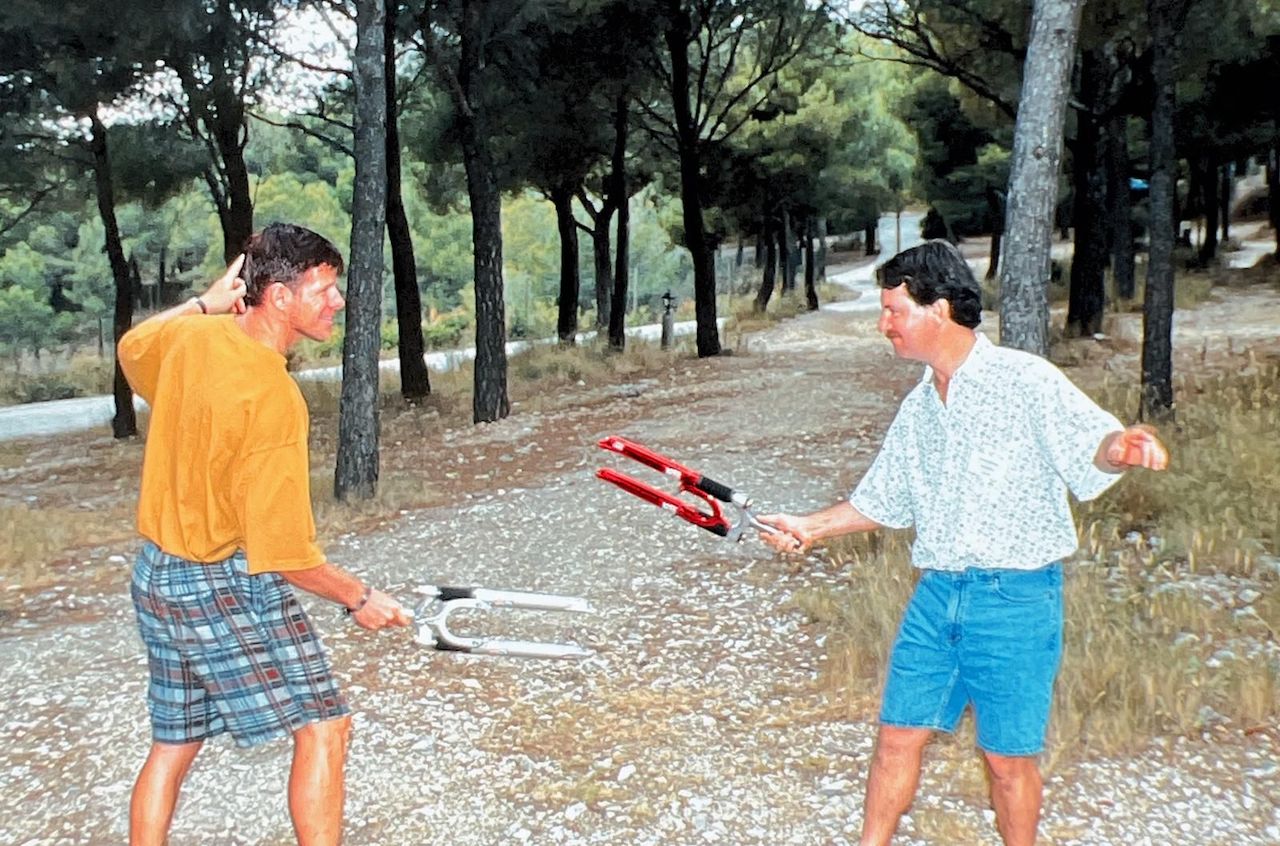
Turner grew up in a family of racers, with an older brother who was a two-time Canadian national champion. In the days following his own racing career, Paul worked as a mechanic for Team Honda and started his own race shop, designing racing exhaust pipes.
While Simons never set himself apart as a racer, his front suspension designs won international acclaim on the national and world championship motocross circuit. Most notably, his unique “upside-down” UDX-60 fork was used not only by Brad Lackey to become the first American world motocross champion in 1982 but also by the motorcycle industry at large as a universal standard.
As Steve remembered how it all began, “It all started when Paul came to me with the idea of a mountain bike suspension fork. He said he’d design it, but knowing my history with designing and building forks, he asked that I help steer him through the process. We originally used fork crowns that Keith Bontrager used for his “Composite” (rigid) fork, but we had supply issues with Keith. So, we decided to build our own.
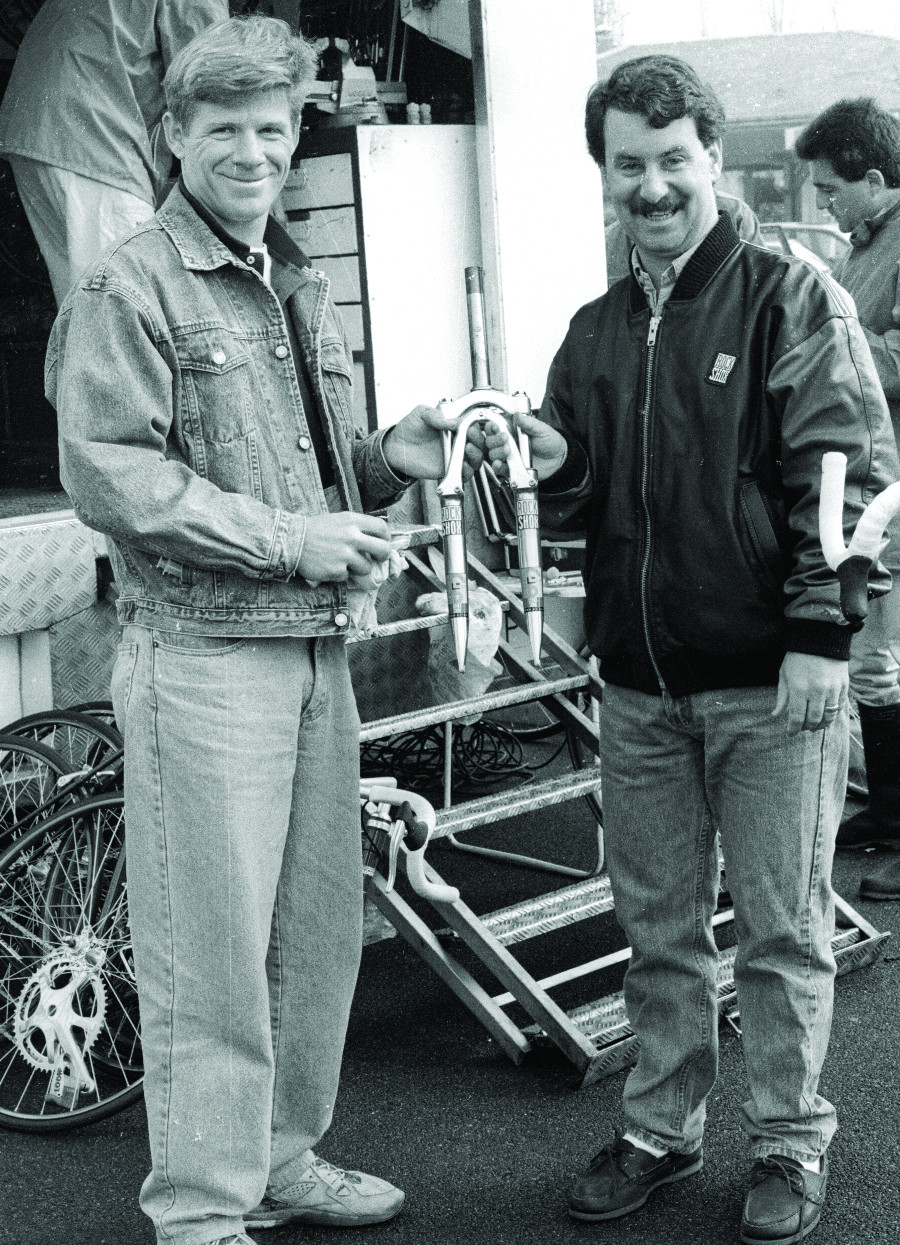
“From my history with selling forks, I knew there would be plenty of problems in getting the company running with distribution, so we partnered with Dia-Comps to help handle some manufacturing, customer service, and shipping duties.
“We had a few test riders using the fork in 1989, but everything changed in 1990 at the 1990 World Championships in Durango.”
As word spread about the forks during that historic weekend, American and European riders alike clamored to get the iconic RS-1 mounted to their bikes. Soon, the quaint mountain condo that RockShox had rented was turned into a frenzied suspension service center. With oil-drenched carpets and a pile of discarded rigid forks outside the door, RockShox’s future legacy had begun.
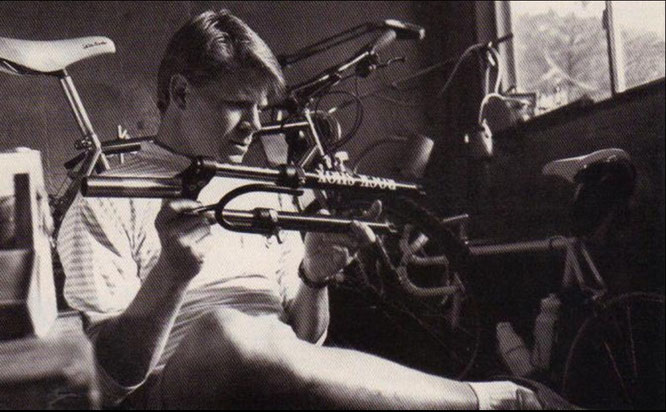
“Everyone got it when Greg Herbold used the fork to win the downhill,” said Steve. “But when Ned Overend won the cross-country race using the (unstickered) fork, well, that’s when the European riders got the message, and everything changed!”
Still, for the legion of bicycle industry veterans ignorant of both motocross history and the benefits of suspension, the impact the medal winning fork had and more importantly would have on the sport, still made no sense.
“We faced a lot of pushback in the early days. The bike industry didn’t want new stuff to come along. RockShox was doing everyone a favor, but it made for a lot of work and different thinking, and not everyone was ready for that.”
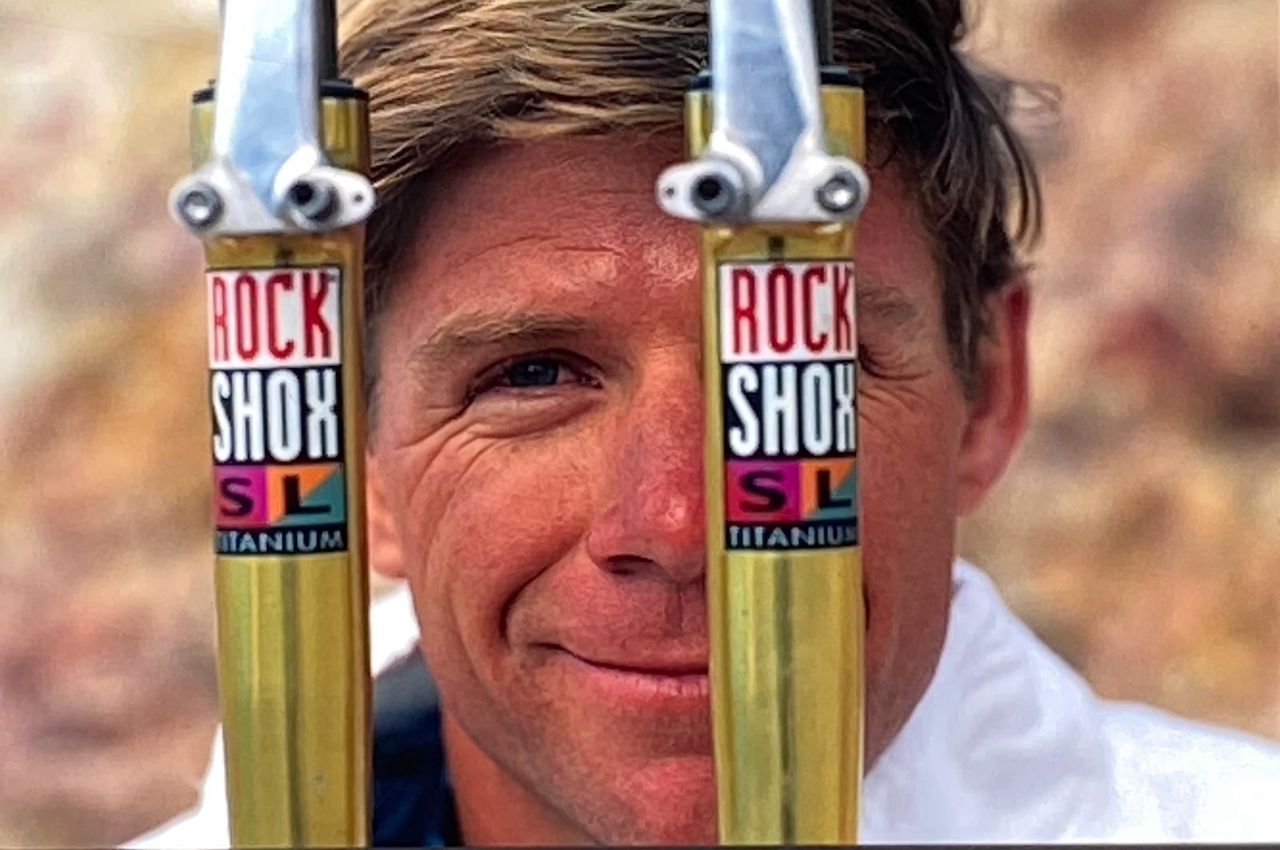
Industry pushback notwithstanding, RockShox continued to grow thanks to the number of top cross-country and downhill racers who were more than happy to think differently and reap the performance benefits that RockShox suspension provided.
Beyond their shared motocross experience, RockShox owed its earliest success to the respective talents of its two founders. Steve oversaw the business and manufacturing end in California and created the all-important global supply chain, while Turner was the face at the races, creating important connections and conjuring new design directions.
Perhaps the boldest move RockShox ever made was when they took a slimmed-down version of their mountain bike suspension fork to the famed Paris-Roubaix road bike classic. Known as the “Hell of the North” due to its brutal cobbled roads, the RockShox Ruby fork not only won in its debut effort in 1992, but also for the next two years.

Helping maintain their racing pedigree was a staff consisting of a handful of former motorcycle racing mechanics and team managers who equally understood the concepts of suspension technology and its demands over rough terrain.
Away from the races, RockShox would cement its leadership role in marketing and sales circles by manufacturing new suspension designs that relied on the technologies and know-how that had long been standard for motorcycles. From that first RS-1 to the Mag 21, Judy, SID, double crown Boxxer, and a host of rear shocks, RockShox became the leading suspension company in the industry. The brand’s success could be measured as much by the number of race wins and production units sold as by its cutting-edge marketing.
In the years to come, RockShox would continue to win races and become a financial juggernaut. In just eight years following the arrival of their first fork, the brand’s revenue would eclipse the $125 million mark.
Reflecting the meteoric rise in both the brand and the sport’s popularity, in 1995, Paul and Steve sold part of RockShox to a private equity company before becoming one of the first major mountain bike companies to go public in 1997.
In 2002, SRAM purchased RockShox, and with their renowned level of energy and investment, the fabled suspension brand that got its start with 100 forks in a dimly lit hotel room in the Colorado Rockies took on a new life with a growing product range reflecting the needs of new-age mountain bikers and the massive leap forward in modern riding styles.